
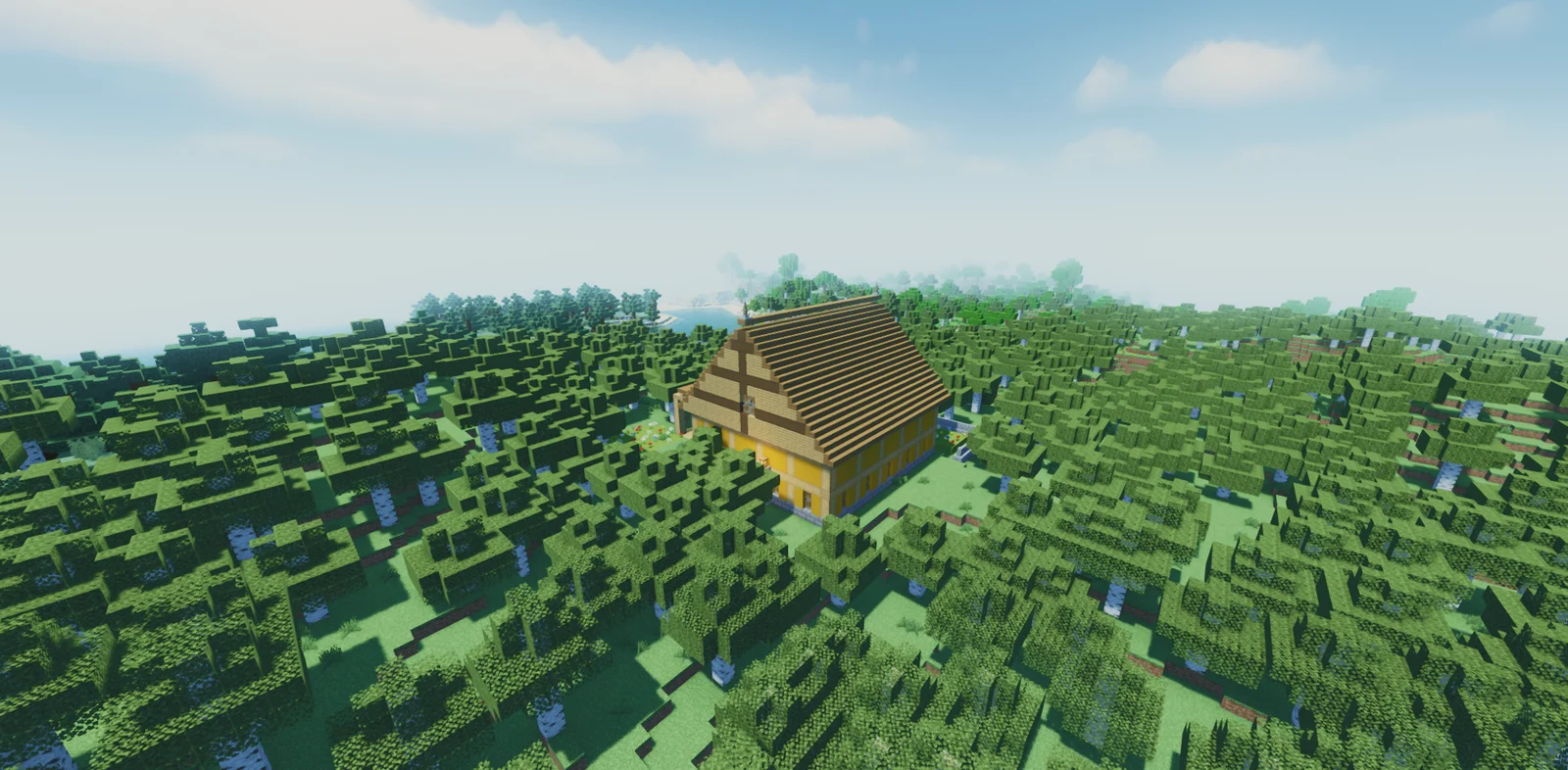
Honey-gold gables, projecting hive racks and flowering walled beds define the Abandoned Apiary. An open veranda faces the old bee garden, while the honeyhouse contains work surfaces, shelving and storage.
Lantern Moths live around the site’s working lights. Honeycomb briefly calms them and gives them a glow response; it does not tame or breed them. The Garden inscription also appears here, linking a quiet working garden to the darker account of the cloister.
Place in the story
The wax ledger and hive register both ask that the flowers be left. The second notice permits taking only what the road needs. The honeyhouse and garden show a way of gathering supplies that still leaves something living behind.
The Garden chapter appears here, allowing a comparison with the cloister’s gardener who tends one tree while nothing else may grow. That contrast can be read as care becoming restrictive, but the writing does not establish that the apiary caused the cloister’s growth. The resident moths remain small living inhabitants rather than an explanation for the vessel.
Inscriptions & evidence
- IV · The GardenThe Garden describes the cloister burial and the gardener’s single tree.
- IV · The GardenThe apiary’s separate Hive Register says “Leave the flowers” and “Take only what the road needs.”
Where to find it
Look in newly generated Overworld terrain in these biomes. Placement also checks the surrounding ground.
- Site type
- Discovery
- Template dimensions
- 45 × 43 × 39 blocks width × depth × height
The dimensions include the full template canvas and its surrounding space; the occupied building can be smaller.
Inside the site
- Timber honeyhouse and veranda
- Projecting hive racks
- Flowering walled garden
- Resident Lantern Moths
- The Garden inscription
Inhabitants
- Lantern MothA peaceful resident that stays near home and seeks working Roadkeeper lights.
Inscriptions
Use the Surveyor's Lens on the inscription, then open your Field Journal to keep its words.